Engineering progress depends on fast feedback loops. We support hardware design teams with manufacturing-aware design input, quick-turn prototyping, sourcing, and testing — removing the bottlenecks that slow iteration and introduce risk.

Engineering progress depends on fast feedback loops. Hardware designers balance performance, cost, compliance, and manufacturability — while dealing with component availability and aggressive timelines. We support hardware design teams by coordinating design, prototyping, sourcing, and testing so your product moves from concept to production with fewer handoff gaps.
Based in Toronto, Ontario — Circuits Central serves hardware designers and engineering teams across the Greater Toronto Area and Canada. Direct engineer access, same-timezone communication, and a team invested in your product’s success, not just processing your file.
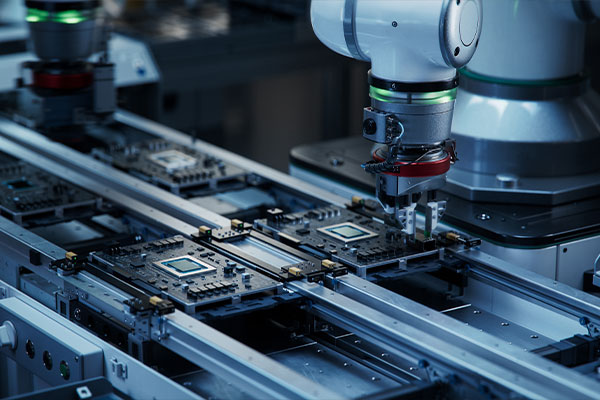
Manufacturing-Aware Design Input
Early feedback on footprints, polarity marking, connector access, and assembly constraints — so the first build is easier to assemble, inspect, and test than a build reviewed only at the Gerber stage.
Schematic & PCB Layout Services
Support from requirements and block diagrams through verified layout and production-ready documentation when you need design capacity or a manufacturing-perspective design review.
Prototype Builds & Quick Turn
Engineering validation builds, demo units, and pilot runs with no minimum order quantity. 24-hour assembly available for eligible builds when your schedule demands it.
Sourcing & Alternates Planning
Component selection support that accounts for current availability, lifecycle risk, and acceptable alternates — so your BOM stays buildable through prototype and into production.
Test Planning & Execution
From basic inspection to product-specific functional testing, JTAG, ICT, and flying probe — we help design and execute a test strategy that matches your product's risk profile.
Rework & Bring-Up Support
BGA rework, component swaps, pad repair, and fault isolation during bring-up — keeping early builds alive long enough to answer the engineering questions they were built to answer.
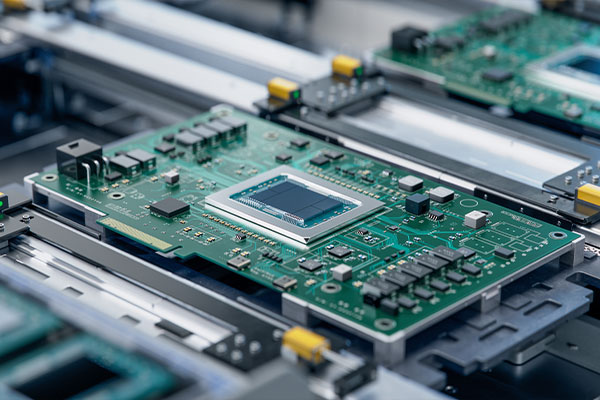
A recurring pattern in prototype programs: boards slip when documentation is incomplete, when part constraints aren’t visible early, or when the assembly partner has to resolve preventable questions after files are submitted. The right partner helps reduce those friction points. That translates into concrete engineering benefits:
| Engagement Path | Best For | Considerations |
|---|---|---|
| DFM Review Before Release | Designs mostly complete — targeted feedback before fabrication | Best when requirements are stable; cannot replace missing design intent documentation |
| Design Support + Prototyping | Short feedback loop with manufacturing intent embedded in the design package | Requires coordinated schedule and clear ownership of requirements and revisions |
| Prototype-to-Production Handoff | Continuity from early builds through pilot runs with fewer scaling surprises | Multiple thermal cycles increase laminate fatigue risk; each additional cycle degrades reliability margin |
| Board warpage | Within IPC-7711 flatness tolerances for the package footprint | Needs agreed change-control process so updates remain traceable across revisions |
| Ongoing Manufacturing Partner | Reduces internal workload on purchasing and production coordination for stable products | Requires alignment on approved alternates, documentation standards, and test expectations |

Robotics programs put a specific kind of pressure on hardware designers and their manufacturing partners: designs iterate fast during development, then need to stabilize quickly as the product proves itself. Circuits Central has supported robotics engineering teams at every stage of that arc — from first prototype motor control boards through production volumes — growing alongside programs as they scaled.
We’ve built the board types that define modern robotics platforms: motor control and servo drives, embedded compute carriers, power distribution and battery management, sensor interface hubs, and perception support boards. The DFM knowledge, component decisions, and sourcing relationships built during early-stage development compound into real advantages when those same products need to scale.
Motor Control & Drives
BLDC/servo drivers, gate drive circuits, current sensing, encoder interfaces, multi-axis coordination
Embedded Compute
Compute module carriers, real-time controllers, EtherCAT/CAN interfaces, BGA-dense layouts
Power & BMS
DC/DC power stages, point-of-load regulators, battery management, protection & docking circuits
Sensor Hubs & Perception
IMU/encoder boards, force/torque interfaces, camera carriers, LiDAR support electronics
The earlier the better. Circuits Central can add value as soon as component selection and initial layout decisions are being made — well before Gerbers are finalized or a BOM is locked. Early involvement allows DFM input to influence decisions while they are still low-cost to change, rather than arriving as a list of rework items after layout is complete. If a full design review is not yet warranted, even a targeted conversation about assembly strategy, component choices, or test planning can reduce risk significantly in later build cycles.
Yes. Circuits Central helps hardware designers choose an assembly strategy that matches the current design stage, then provides formal DFM guidance covering layout risks, component selection, footprint concerns, pad geometry, spacing, and assembly notes. Addressing manufacturability during prototype planning — rather than after a board comes back with defects — reduces rework, improves first-pass success, and makes subsequent revisions more predictable and cost-effective to build.
Yes. Many bring-up delays trace back to avoidable issues such as incorrect footprints, unclear polarity markings, missing reference designator clarity, and inconsistencies between the BOM and placement data. Circuits Central reviews these inputs before a build starts so that engineering time is spent validating the design and confirming function, not resolving build mistakes that could have been identified earlier in the process.
At minimum, a clean handoff includes a complete BOM, Gerbers or fabrication files, pick-and-place data, assembly drawings, and any test or programming requirements. Beyond that, Circuits Central can assist with gaps in the package — including component selection input, DFM feedback on layout decisions, sourcing risk assessment for long-lead or single-source parts, and test planning. The designer retains ownership of functional and architectural decisions, while Circuits Central provides manufacturing-aware input to ensure those decisions translate into a buildable, testable, and repeatable assembly.
Engineering change orders and design revisions are managed through a controlled process to prevent unintended build variation. When a change is introduced, Circuits Central reviews the impact on the BOM, pick-and-place file, assembly notes, and any in-progress kitting or fabrication before proceeding. The goal is to ensure that every change is documented, deliberate, and traceable — so that revision history remains clear and future builds consistently reflect the correct design intent rather than accumulating informal or undocumented adjustments.
For hardware designers who are still iterating — which describes most designers during early prototype and NPI stages — local manufacturing at Circuits Central means faster build cycles, direct communication without time zone friction, and the ability to act on DFM feedback or design changes in real time. Overseas manufacturing introduces lead time buffers, minimum order constraints, and slower feedback loops that make sense once a design is stable and volumes justify them, but that slow down and increase the cost of iteration when a design is still evolving. Working locally during development lets designers move faster, catch issues earlier, and arrive at a stable, validated design before making broader production decisions.
Repeatability comes from controlled revisions, consistent sourcing decisions, clear assembly notes, and defined inspection or test expectations — established from the first build rather than retrofitted after problems emerge. When these elements are in place early, prototype results stay meaningful and comparable across build cycles, rework is easier to isolate and attribute, and the transition into pilot runs or production becomes significantly smoother. Hardware designers who invest in documentation and change control early avoid the common problem of a working prototype that cannot be reliably reproduced.
Online quick-turn portals are optimized for speed and self-service. Circuits Central is optimized for engineering collaboration. You get direct access to an engineer who reviews your files before building, understands your project across revisions, flags issues proactively, and supports bring-up and debugging. For teams building complex or evolving products, that engineering relationship has tangible value across every build — and working locally during development means you can move faster, catch issues earlier, and stabilize the design before making broader production decisions.
Trustindex verifies that the original source of the review is Google. Excellent PCB assembly services. We have had an excellent experience with Circuits Central. - Turn Around Time: Boards were always assembled on time including expedited projects with 24-hour TAT. - Customer Service: Customer service is fast to respond over email and resolve any outstanding issues very quickly. - Quality: Excellent assembly quality with no errors or issues including for complex projects. - Communication: Circuits Central made the jobs simple to submit. We didn't have to submit many files or prepare every last detail for them.Posted onTrustindex verifies that the original source of the review is Google. Circuits Central has been making our boards for over 25 years. They are a great company to work with.Posted onTrustindex verifies that the original source of the review is Google. Great customer service! Highly recommend the team at CCIPosted onTrustindex verifies that the original source of the review is Google. I've been using Circuits Central for over 10 years for all of our NPI projects. Workmanship is exceptional and deliveries are always on time. Many thanks to the Circuits Central team.Posted onTrustindex verifies that the original source of the review is Google. Excellent service and printed circuit assembly quality for 6 years so far, at a very reasonable price. Highly recommended!Posted onTrustindex verifies that the original source of the review is Google. Tailored Service Levels and Pricing. Excellent quality!
Please fill out the form below and we will get in touch with you to further discuss your needs.
